
Case file — Hamburg / EMEA
GermanyCryptocurrency Investigation Services in Hamburg
Blockchain forensics, stolen crypto tracing, and exchange liaison support for clients in Hamburg.
Get StartedHamburg built its wealth on trust long before cryptocurrency existed. As Germany’s largest port and the historic seat of the Hanseatic League, the city’s entire commercial culture still runs on a merchant tradition where a handshake and a reputation mattered more than a contract — the “ehrbarer Kaufmann,” the honourable merchant, is still a phrase people use here without irony. That same culture of trust-based dealing, paired with old private banking houses and a shipping and logistics sector that moves enormous sums internationally every day, creates a very specific opening for fraud once cryptocurrency enters the picture: criminals don’t need to break through hardened scepticism, they need to imitate the kind of trustworthy counterparty Hamburg’s business culture is built to welcome.
BIA™ (Blockchain Investigation Agency) helps individuals, shipping and trading companies, and legal teams across Hamburg trace stolen or diverted cryptocurrency, pin down exactly where it landed, and turn that into evidence that holds up with German police, regulators, insurers, or a civil court. We do the technical blockchain work in-house and follow up directly with the exchanges involved — the two steps that actually move a case forward rather than just documenting the loss.
How Hamburg’s Trading Economy Gets Targeted
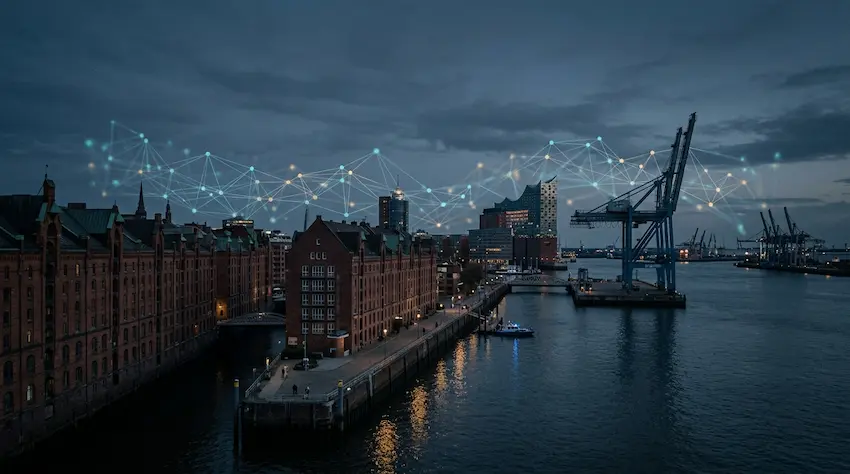
The Port of Hamburg handles a vast share of Germany’s seaborne trade, and the freight forwarders, shipbrokers, and import-export firms clustered around the Speicherstadt and HafenCity districts routinely process large international payments on tight shipping schedules. That combination of urgency and trust is exactly what business email compromise fraud exploits: a spoofed or intercepted invoice redirects a routine supplier payment into cryptocurrency, and by the time anyone notices the account details changed, the funds have already moved several steps down the chain.
Hamburg’s private banking scene, built around houses with genuine multi-generational history, sees a different pattern: wealthy clients approached with crypto investment opportunities framed as something a trusted family advisor or old business contact recommended, deliberately built to sound like the kind of quiet, relationship-based deal this city’s old money is accustomed to. Add in Hamburg’s media and publishing sector — home to major German publishing houses — and you get a third pattern: BEC schemes targeting the recurring vendor and licensing payments that flow through media companies’ accounts, often timed around contract renewal periods when a changed payment detail is less likely to raise immediate suspicion.
Regulatory and Reporting Realities in Hamburg
Crypto exchanges and custody providers operating in Germany still fall under BaFin’s national authorisation regime, regardless of city. For criminal reporting, Hamburg cases go through the Landeskriminalamt Hamburg’s cybercrime division, which handles the investigative side once a complaint is filed. Because so much of what we see in Hamburg touches international shipping counterparties or overseas crypto platforms, our reports are built with an eye toward whatever foreign exchange or law enforcement body might eventually need to act on the findings — not just the domestic side of the case.
For shipping and trade-related fraud specifically, there’s often a commercial dimension running in parallel with the criminal one — a dispute over an unpaid shipment, a contract question, or a marine insurance claim — and we structure our documentation so it’s equally useful to a commercial litigator as it is to a police investigator.
What a BIA™ Engagement Actually Delivers
- A reconstructed money trail: Exactly how funds moved from the point they left your control, through however many wallets or platforms, to where they currently sit.
- A named destination: Not a vague “the funds went to an exchange,” but the specific platform and account type — the detail that determines whether a freeze request is even possible.
- Documentation built for its audience: Whether that’s an LKA Hamburg investigator, a commercial litigator, a marine insurer, or BaFin, the report is written for whoever has to act on it next.
- Direct exchange outreach: We contact the relevant platform’s compliance desk ourselves to push for a freeze, working with your legal counsel wherever a formal order gets faster results.
How the Process Runs, Start to Finish
Getting Started
Send over wallet addresses, transaction hashes, invoices or correspondence, and a plain account of what happened. Within a day or two, we’ll tell you honestly whether the case looks traceable and roughly how involved it will be.
Tracing the Funds
We follow the transaction chain across the blockchain, flag any mixing or bridging activity used to obscure it, and pay close attention to the moment funds reach a platform that requires identity verification — the point where the trail stops being anonymous.
Putting It in Writing
Findings become a structured report matched to what your case needs next — an LKA Hamburg complaint, a BaFin filing, a commercial dispute file, or a solicitor’s brief for civil recovery.
Chasing the Exchange
Once the destination platform is confirmed, we reach out directly to request a freeze, supplying the evidence needed to support it, and coordinate with your lawyer wherever formal legal process is the better route.
Fraud Types We Encounter Most Often in Hamburg
- Shipping & Trade Invoice Fraud: Compromised or spoofed vendor invoices redirecting freight and supplier payments into cryptocurrency.
- Relationship-Based Investment Scams: Crypto opportunities framed as trusted, quiet, referral-based deals — deliberately styled to match how legitimate Hamburg private banking actually works.
- Media & Publishing Vendor Fraud: BEC schemes targeting recurring licensing or vendor payments at media companies.
- Fake Trading Platforms: Standard investment scams affecting Hamburg’s broader retail crypto holder population, often via social media advertising.
- Post-Scam Recovery Fraud: Fraudulent “recovery” outfits targeting people who’ve already lost funds once, charging fees for services that deliver nothing.
Why Hamburg Clients Choose BIA™
We won’t tell you recovery is guaranteed, because it isn’t — for us or for anyone else claiming otherwise, and that claim itself is usually the tell of a second scam aimed at people already burned once. What we do promise is a genuinely thorough investigation, straight talk about how strong or weak your case looks, and reporting that’s actually built to be used, not just filed.
- Real forensic work: Blockchain explorers, wallet clustering, and exchange compliance liaison handled directly by our own analysts.
- Trade & shipping fluency: An understanding of how invoice fraud and BEC schemes interact with crypto laundering, relevant to Hamburg’s port-driven economy.
- Discretion as a baseline: Essential for private banking clients and family-run trading houses where reputation is part of the business itself.
- Working exchange relationships: Direct contact with compliance teams at the platforms Hamburg cases most often lead to.
Legal Routes Available to Hamburg Victims
Victims can file with the Landeskriminalamt Hamburg’s cybercrime unit, and where a German-licensed exchange is implicated, a parallel BaFin complaint is worth pursuing. For shipping and trade cases, coordination with marine insurers or commercial litigation counsel often runs alongside the criminal report. For significant losses generally, civil litigation through a German solicitor — including a freezing application against an identified exchange account — tends to be the most direct path to recovery, and that only works with a solid forensic trace underpinning it, which is exactly what we build our reports to provide.
We coordinate directly with Hamburg law firms and, where relevant, marine insurance counsel to make sure our findings integrate cleanly into whichever process your case actually needs.
Where Hamburg Funds Usually Land
Trade-related fraud out of Hamburg typically moves through Bitcoin or USDT in the first hop, chosen for speed and stability during laundering, with funds often pushed through a decentralised exchange or cross-chain bridge before touching anything regulated. Private banking-targeted scams lean more heavily on Ethereum and ERC-20 tokens, often dressed up as sophisticated fund structures. Once funds do surface on a compliant, identity-verified platform — commonly Binance, Kraken, or Bitpanda — that’s the point a case shifts from theoretical to genuinely actionable, since it’s usually the first place a real identity attaches to the transaction chain.
Working With Clients Across Hamburg
Cases reach us from across the city’s distinct commercial pockets: HafenCity and Speicherstadt for trading and logistics firms dealing with invoice fraud, the traditional banking and merchant houses around the Binnenalster for private client cases, and Hamburg’s media district for publishing-related vendor fraud. As with any city, the investigation itself doesn’t change based on which neighbourhood a client works out of, but recognising these local patterns early — whether a case looks like a diverted shipment payment or a “referral-only” investment pitch — helps us move faster in the first, most time-sensitive days of a case.
Start With a Straight Conversation
Whether you’re a trading company that just discovered a diverted supplier payment, or a private client who trusted a “referral-only” investment that turned out to be fake, the practical reality is that speed matters more than paperwork in the first few days. Send us what you have, and we’ll give you a direct, honest read on whether it’s traceable, what it would take to pursue, and whether it’s genuinely worth your time — before you commit to anything. A quick initial look costs you nothing but a short conversation, and it’s usually enough to know whether the case has legs.
Other Locations We Serve
Ready to start your case?
Get a confidential assessment from our forensic team within 24 hours.
Get Started